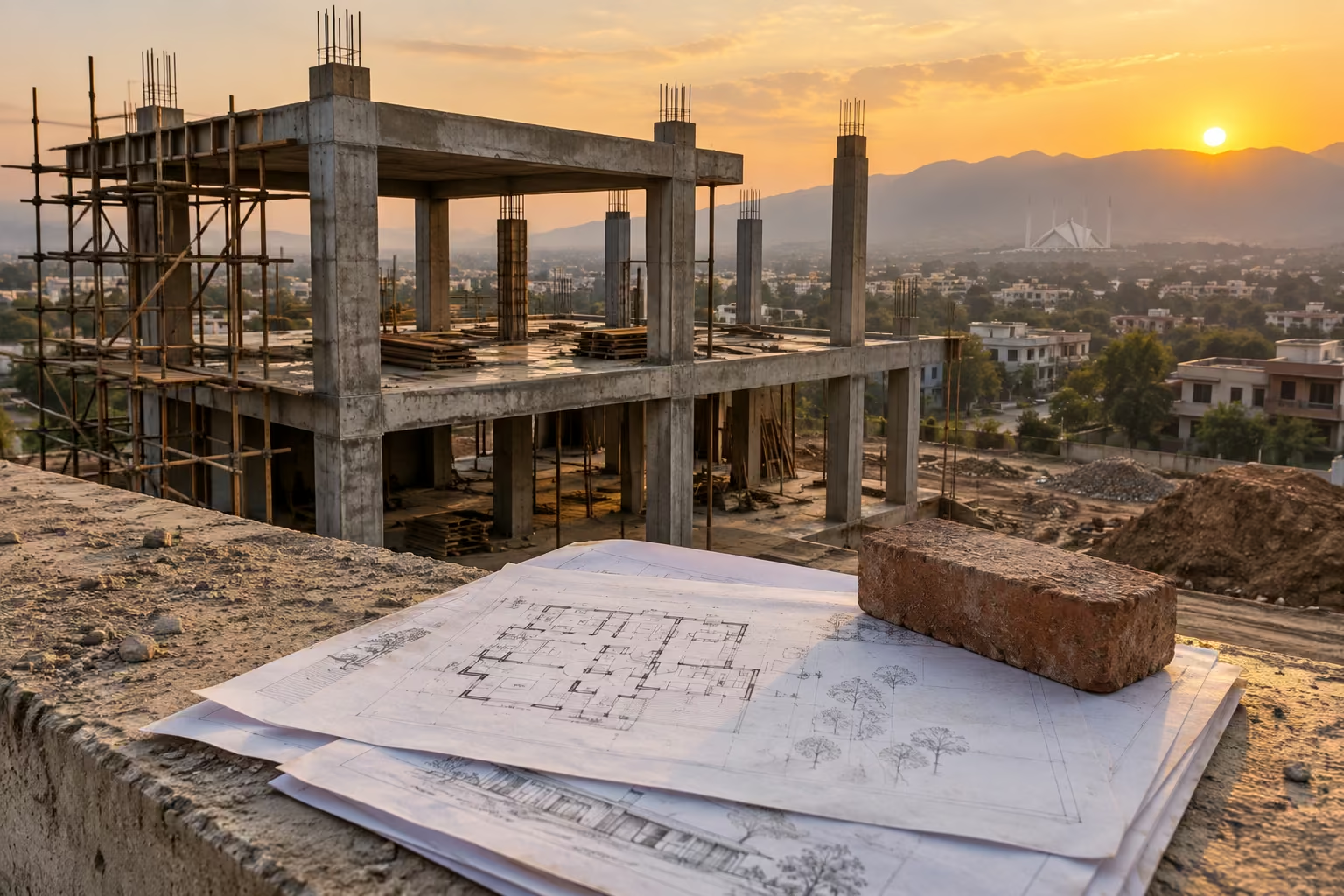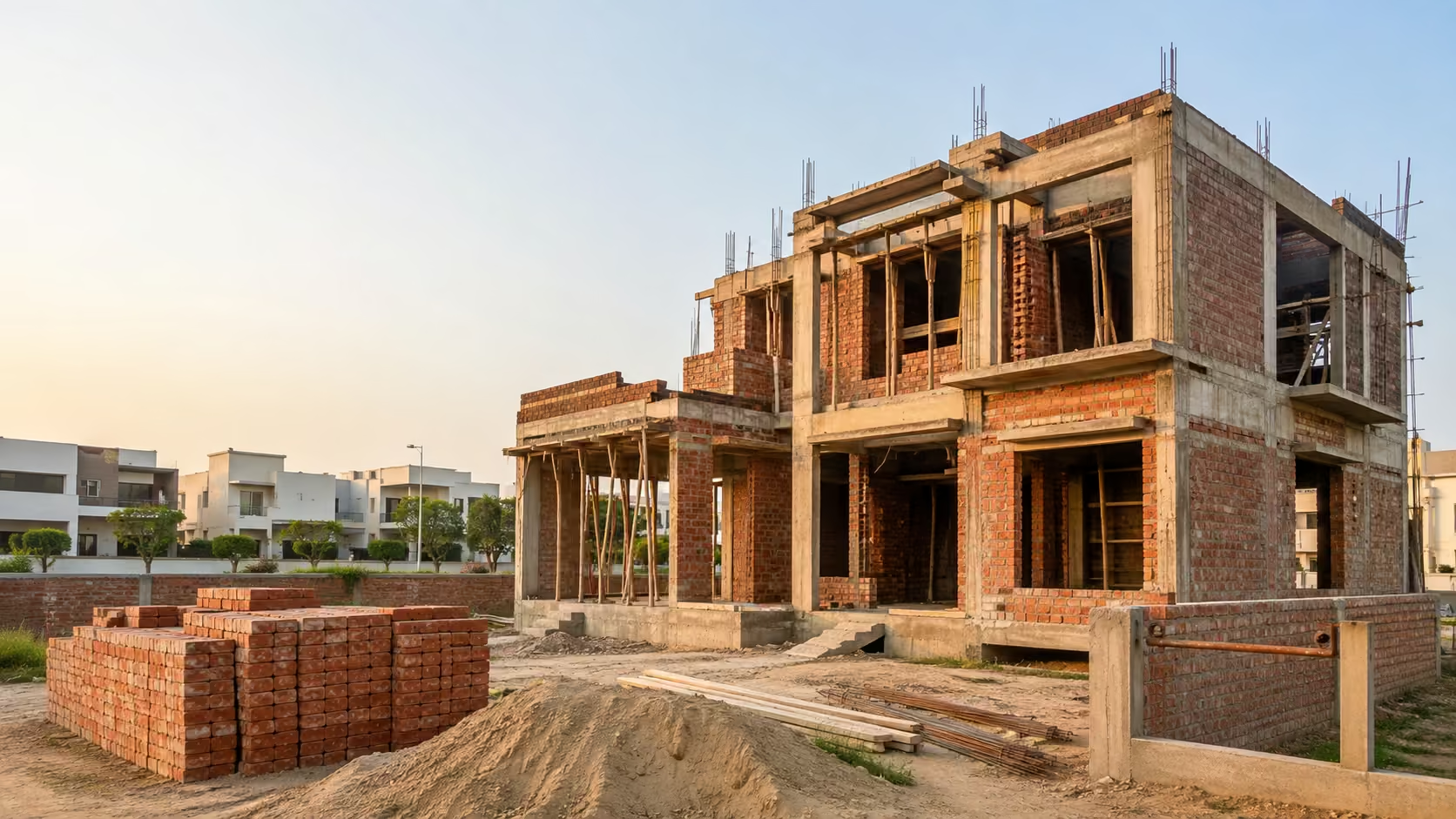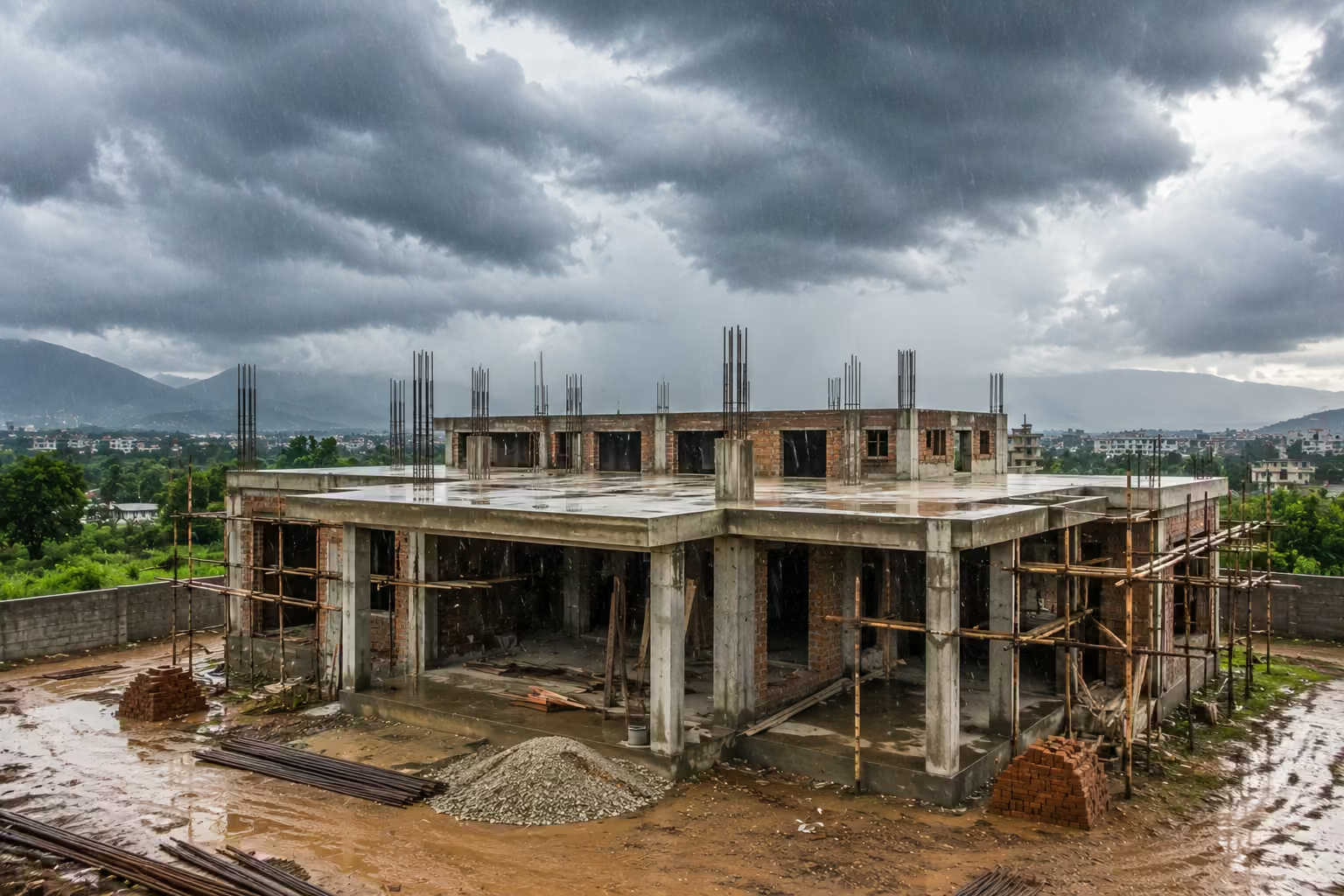
Every year, monsoon rains catch homeowners in Islamabad and Rawalpindi at the worst possible stage of their build grey structure standing, roof freshly cast, no waterproofing done yet. A few days of continuous rain later, and you’re staring at seepage marks, a flooded basement, or cement bags ruined beyond use. None of this is bad luck. It’s almost always a planning gap.
If your house is under construction right now, or you’re about to start one, this guide walks you through exactly what monsoon rain does to an unfinished structure and the specific steps that stop the damage before it starts.
Why Monsoon Season Is the Riskiest Time for an Under-Construction House
A finished, occupied house has layers of protection working together: roof membrane, external paint, proper slopes, drainage pipes, sealed windows. An under-construction house has none of that yet, which is exactly why rain does so much damage during the build phase rather than after.
Three things make monsoon particularly dangerous for a project mid-build:
- The roof slab is exposed.
Once the shuttering comes off, a freshly cast RCC roof has no waterproofing layer. Rainwater sits on it, finds hairline cracks from curing shrinkage, and works its way into the slab.
- Curing concrete meets standing water.
Ironically, concrete needs water to cure, but controlled water, not pooled rainwater sitting unevenly and washing out cement fines from the top layer.
- Material storage gets compromised.
Cement, especially, is highly moisture-sensitive. A few hours of exposure to humid, wet conditions can start hydration in the bag, turning good cement into unusable lumps.
Understanding why the risk exists makes the fixes below make a lot more sense — this isn’t a checklist to follow blindly; it’s damage control based on what water actually does to a building at each stage.
Stage-by-Stage Monsoon Protection Plan
1. Foundation and Excavation Stage
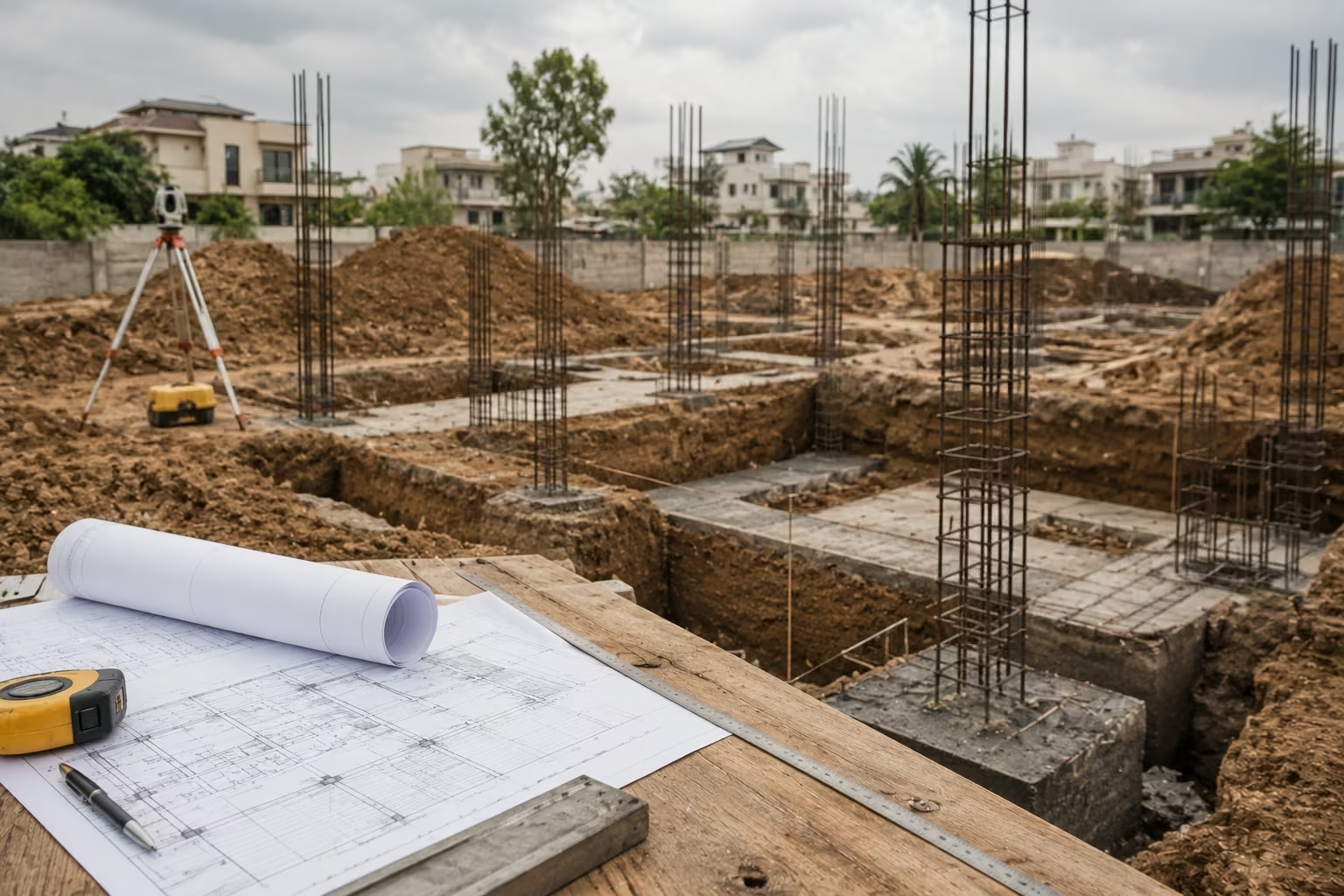
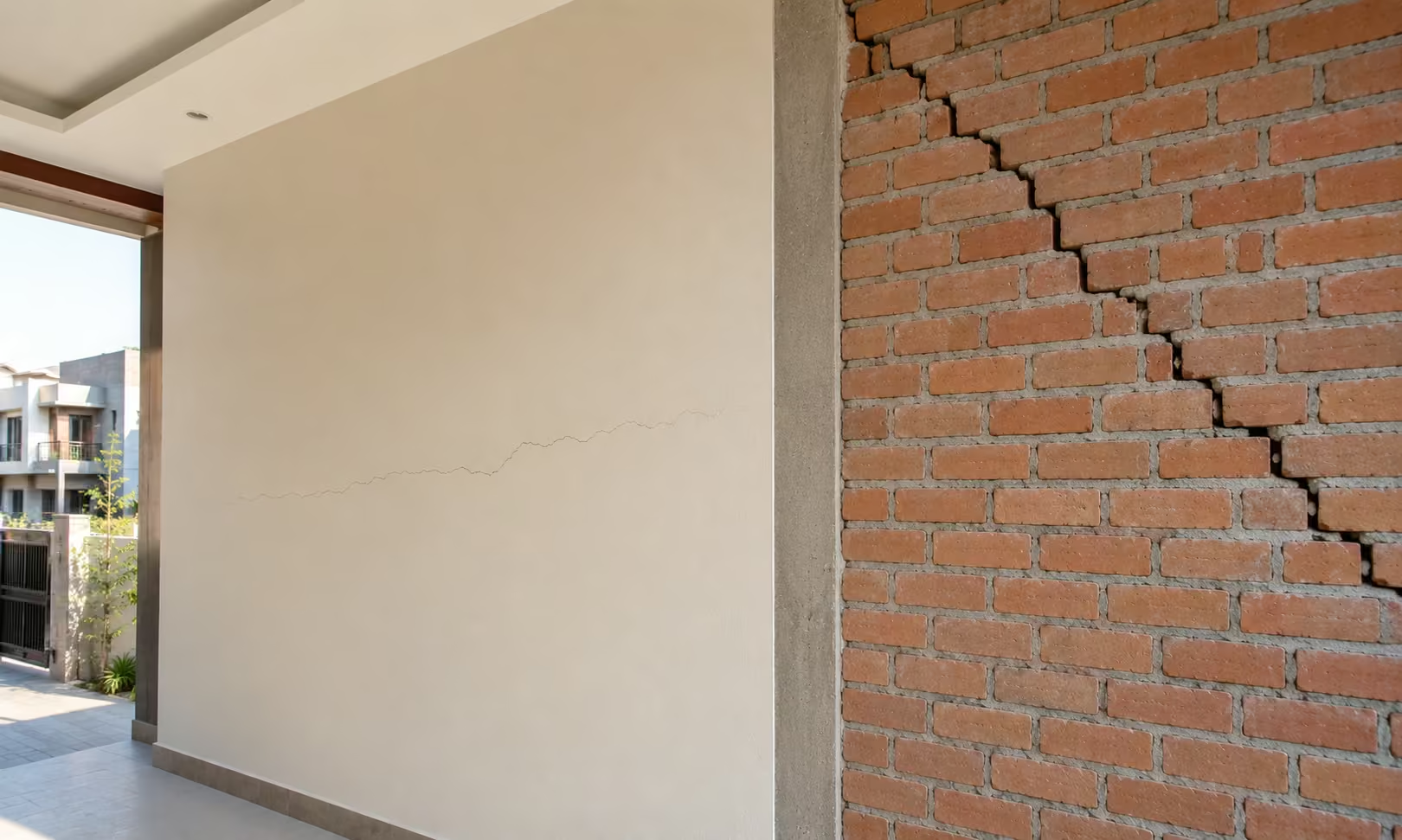
If your excavation or foundation work coincides with the monsoon, standing water in the trench is the single biggest threat. Water pooling against footings for extended periods weakens soil bearing capacity and can cause differential settlement later, a problem that shows up as structural cracks years down the road, long after it’s cheap to fix.
What to do:
- Dig temporary drainage channels around the excavation so rainwater has somewhere to go other than the trench itself.
- Use a water pump to clear standing water before pouring any concrete. Never pour footings into pooled water.
- Cover open excavations with tarpaulin sheets overnight or when rain is forecast.
2. Grey Structure Stage
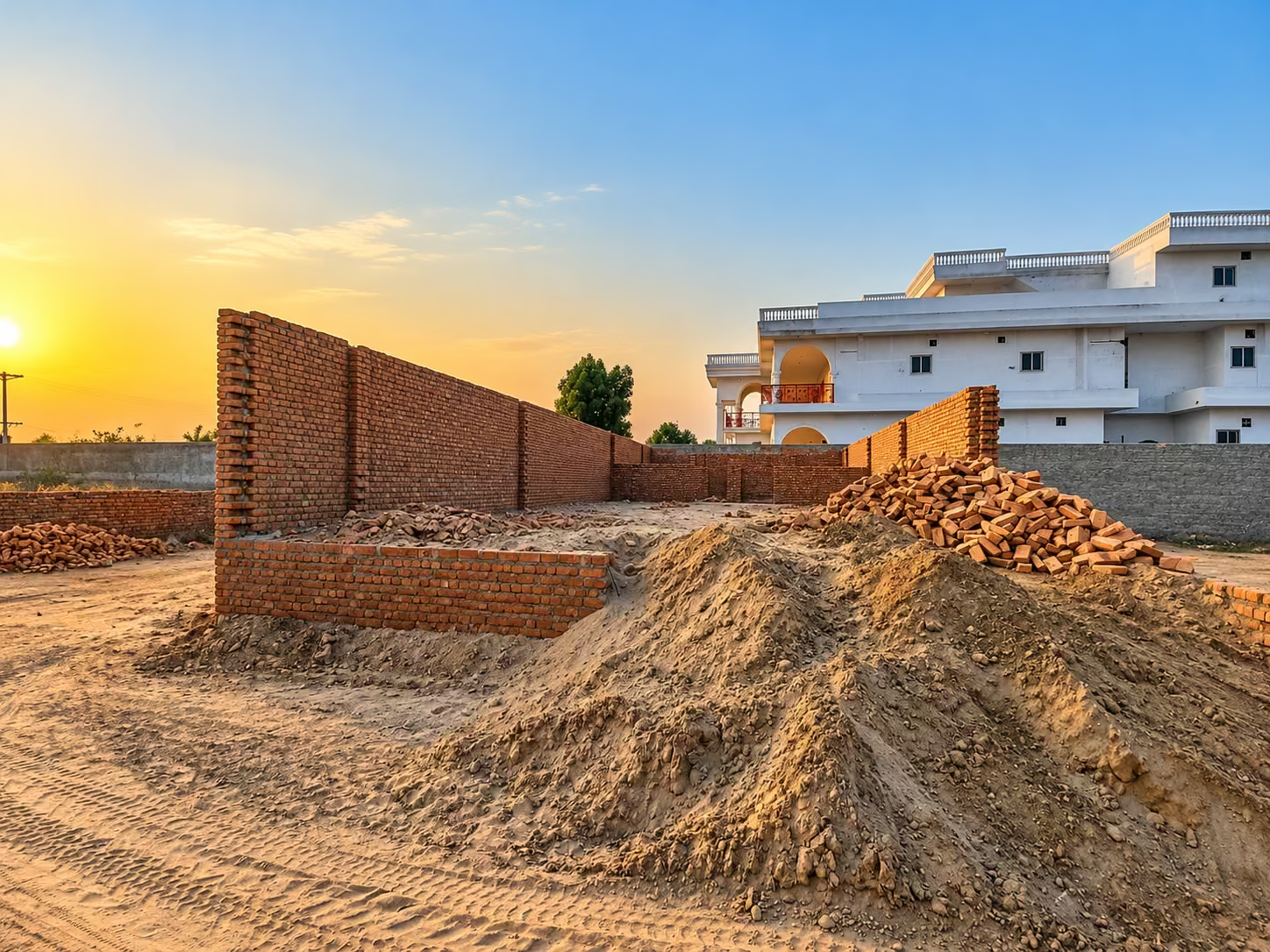
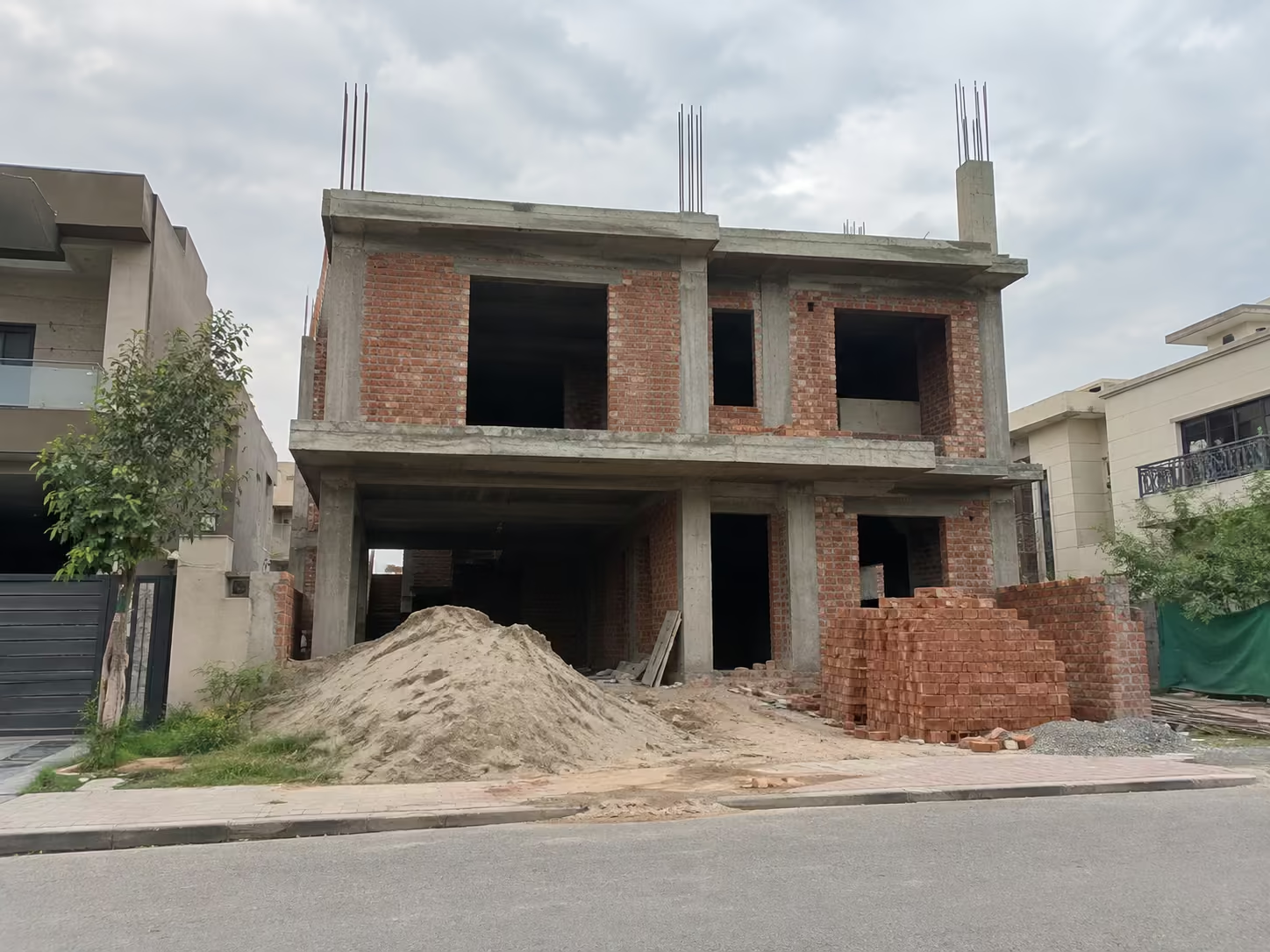
This is where most seepage problems in new houses actually originate, not from bad workmanship years later, but from monsoon rain hitting an incomplete structure during the build. You know the grey structure is the shell before any finishing,g which also means it’s the stage with zero protective layers against water.
What to do:
- Cover exposed brickwork and blockwork with polythene sheeting when rain is expected; wet-then-dry cycles weaken mortar joints before they’ve fully set.
- Never allow rainwater to pool on the roof slab during the curing period; direct it off with temporary slopes or drainage outlets.
- Check that scaffolding and staging areas are stable; waterlogged ground softens scaffold footing and is a genuine safety hazard, not just a construction one.
3. Roof Casting and Curing
A roof cast right before or during heavy rain needs extra attention. Rain disrupts the finishing of the top surface and can wash out cement paste, leaving a weak, porous layer that becomes the starting point for future leaks,s the kind of hairline seepage that shows up two winters later and gets misdiagnosed as a plumbing issue.
What to do:
- Avoid scheduling roof casting during forecasted heavy rainfall where possible.
- If rain starts during curing, cover the slab immediately with polythene sheets weighted down at the edges.
- Once cured, apply a proper roof waterproofing treatment (bitumen membrane, brick coba with waterproof mortar, or a polymer-based coating, depending on your contractor’s specification) before the monsoon peak, not after.
4. Basement and Below-Ground Areas
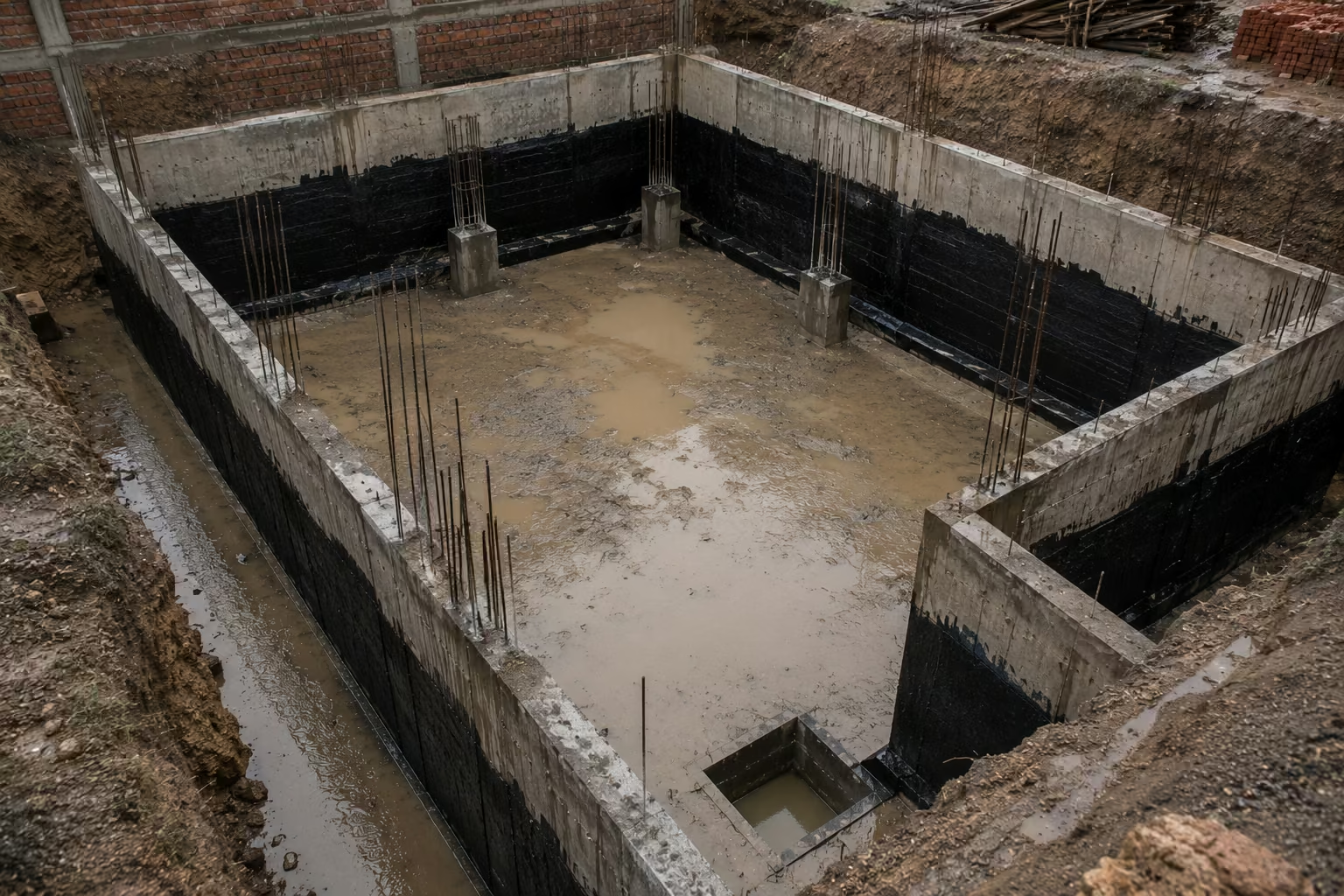
If your design includes a basement, monsoon is the stage where waterproofing decisions matter most. Water table rise during heavy rain puts hydrostatic pressure against basement walls and floors. Pressure finds any gap in the waterproofing membrane and pushes water straight through it.
What to do:
- Apply an external waterproof membrane or coating to basement walls before backfilling. This step gets skipped more often than any other, and it’s nearly impossible to fix once the backfill is in.
- Install a proper sump pit and pump before the structure is closed in, not as an afterthought.
- Ensure the damp-proof course (DPC) is correctly placed at the base of walls to stop rising damp.
Roof Waterproofing Methods: Which One Fits Your Stage of Construction
Not every house needs the same waterproofing approach, and the right choice depends heavily on when in the build you’re addressing it. Here’s a practical comparison of the methods commonly used on residential projects in Pakistan, so you can have an informed conversation with your contractor instead of just accepting whatever they propose by default.
Brick coba (traditional method):
A layer of broken bricks laid in waterproof mortar, sloped toward drainage outlets, then finished with tiles or a cement screed. This is the most common method used locally because it also provides thermal insulation, which matters given how hot Islamabad summers get after the roof is exposed for months. The trade-off is added dead load on the slab and a longer application timeline not ideal if monsoon is imminent and you need protection fast.
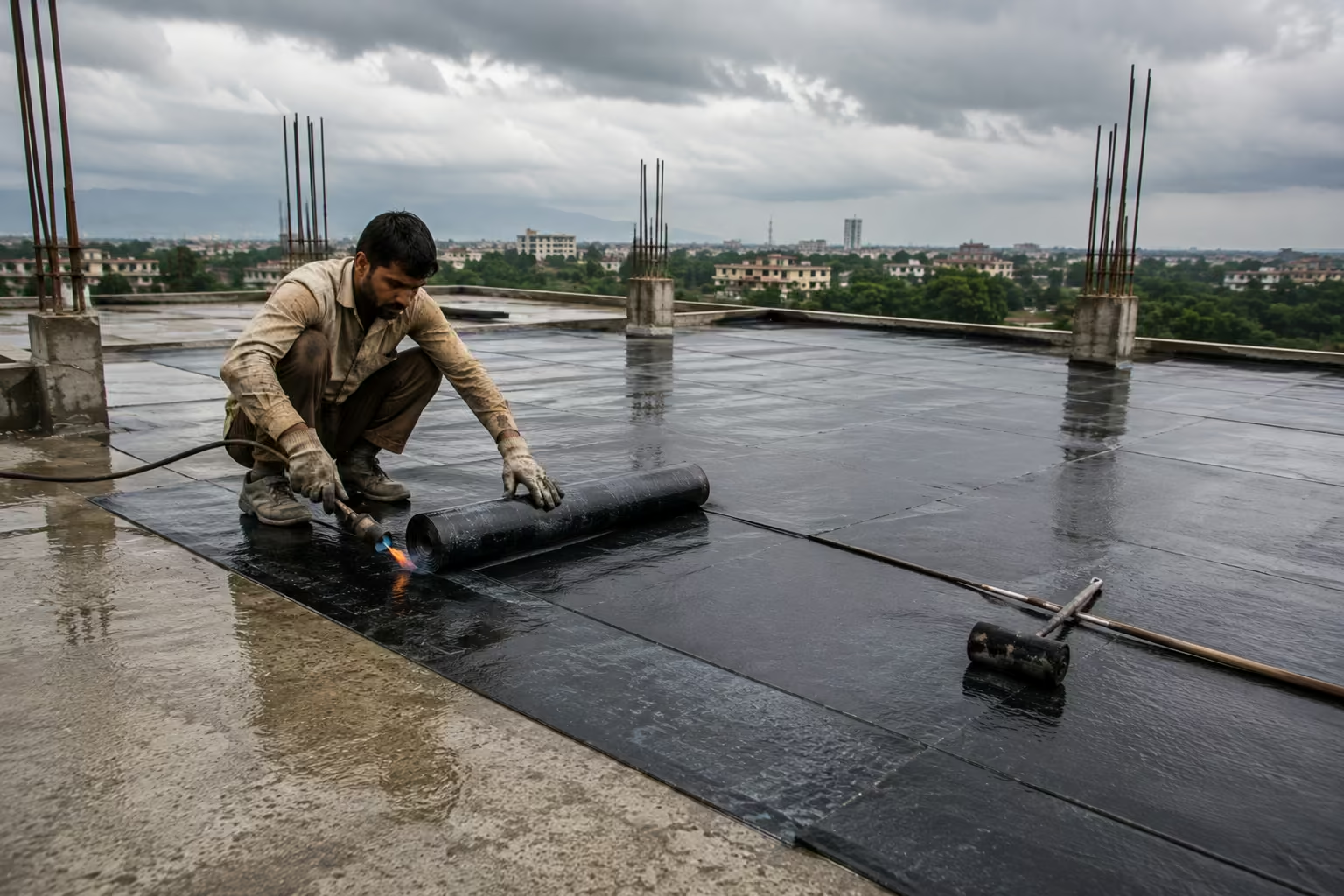
Bitumen membrane:
Torch-applied or self-adhesive sheets are rolled across the slab, offering strong, immediate waterproofing with a faster installation time than brick coba. This is often the better choice when rain is close, and you need the roof sealed quickly, though it typically needs a protective screed on top to prevent UV degradation and foot-traffic damage over the years.
Polymer-based liquid coatings:
Painted or sprayed directly onto the cured slab, these cure into a flexible, seamless, waterproof layer. They’re faster to apply than brick coba and require less specialized labor, making them a reasonable stopgap if you need protection mid-monsoon and a more permanent solution can follow once the weather clears.
Which one should you choose:
If you’re reading this with a roof already exposed and rain days away, a liquid coating or bitumen membrane buys you time. If you’re planning your finishing budget in advance and have weeks before the monsoon peaks, brick coba remains the more durable, temperature-friendly long-term choice for most homes in this region. Either way, the worst option is doing nothing and hoping the rain holds off, a bet that a lot of homeowners lose every year.
Protecting Construction Material From Rain
Structural damage gets most of the attention, but material losses during monsoon quietly eat into budgets too, and unlike structural fixes, wasted material is money that’s simply gone.
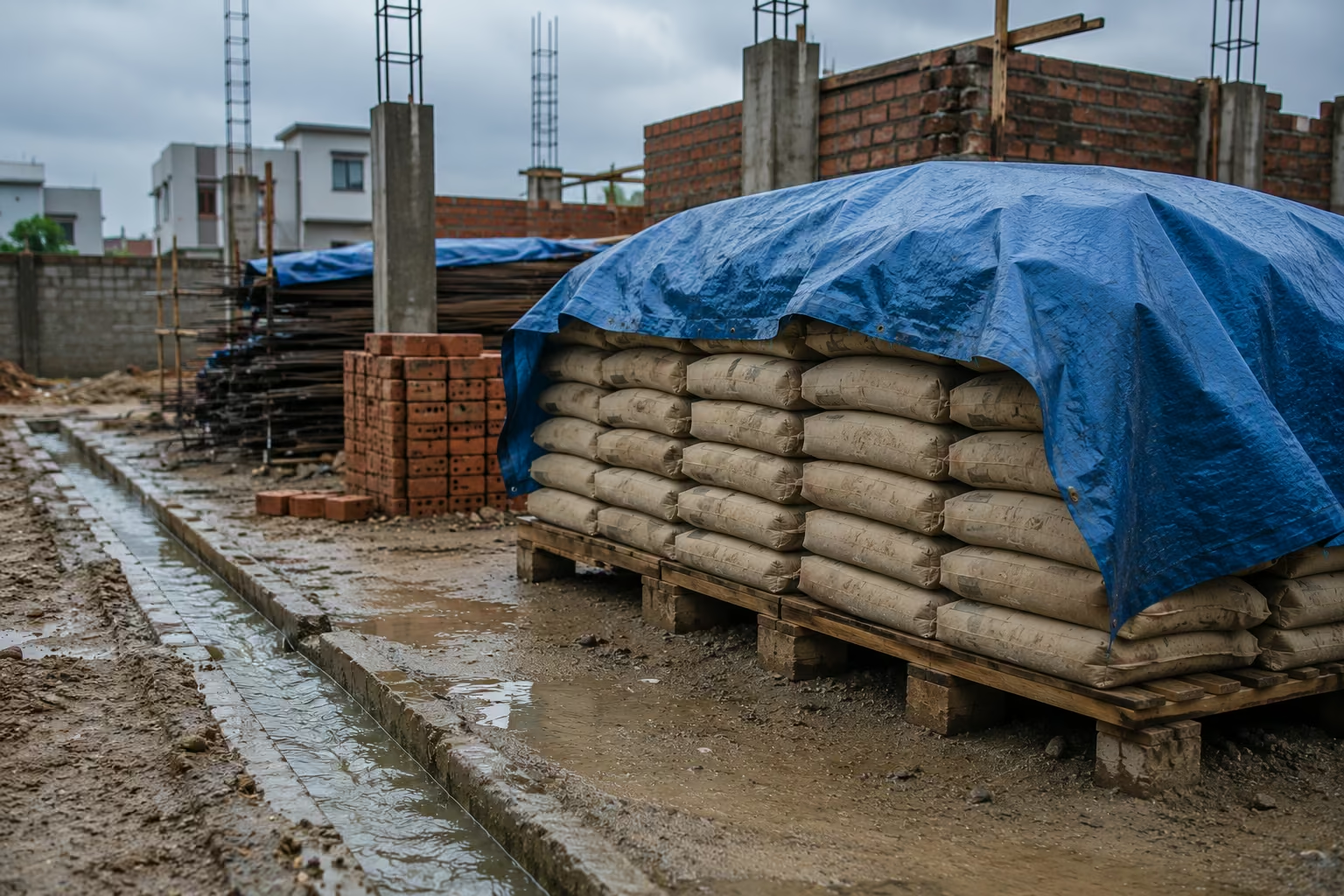
- Cement: Store bags on raised wooden pallets, at least 6 inches off the ground, inside a covered, ventilated store, never directly on bare ground or against an outer wall that can transmit dampness.
- Bricks and blocks: Stack away from low-lying areas that collect runoff; a brick pile sitting in standing water for days weakens over time and affects wall strength.
- Steel reinforcement: Cover with tarpaulin and keep off the ground on wooden supports to prevent rust, which,h if it sets in before the bars are ca, reduces bond strength with concrete permanently.
- Sand and aggregate: Cover stockpiles to prevent excess water content, which throws off your concrete mix ratios if it goes unnoticed.
Site Drainage: The Step Everyone Underestimates
A huge share of monsoon-season construction damage traces back to one simple gap: no site drainage plan. Water needs somewhere to go, and if you haven’t planned that route, it will find its own, usually straight through your foundation trench or basement.
Before the monsoon hits, walk your site and check:
- Are there clear channels directing rainwater away from the foundation and toward the street or a drainage point?
- Is the site graded so that water flows away from the structure rather than pooling against it?
- Are temporary drains cleared of debris and mud so they actually function when it rains?
This is a half-day job for your contractor’s team, and it’s the difference between a wet site and a flooded one.
What Monsoon Damage Actually Costs vs. Prevention
It’s worth putting real numbers next to this problem, because “waterproof your roof” sounds like an optional upgrade until you compare it against what a repair job costs later.
Roof waterproofing done at the right stage, as part of the original finishing scope, is a planned line item within your overall build budget, the kind of cost detailed in our guide to House Construction Cost in Pakistan (2026). Fixing seepage after the fact is a different category of expense entirely. It usually means breaking into a finished ceiling or wall, re-applying waterproofing from scratch, redoing paint and plaster, and, in basement cases, sometimes re-excavating around the foundation. Homeowners do not budget for these costs, and they often face them after they have already furnished or moved into the house, the worst possible time for disruptive repair work.
The pattern we see most often: homeowners skip or delay waterproofing to save a modest amount during construction, then spend several times that amount two or three years later repairing the damage and replacing finishes around the repairs. Prevention isn’t just cheap; it’s a fraction of the disruption.
Common Monsoon Mistakes We See on Sites in Islamabad and Rawalpindi
- Pouring concrete right before predicted heavy rain: always check the forecast and build in a buffer.
- Leaving cement bags in open trucks or uncovered stacks overnight: a single bad night can spoil an entire delivery.
- Ignoring small pooling on the roof slab: it looks harmless until it becomes the entry point for seepage that surfaces months later, often mistaken for a completely different problem.
- Skipping basement waterproofing to save costs: this is consistently one of the most expensive corners to cut, since fixing it after backfilling means re-excavation.
If any of this sounds familiar, it’s worth revisiting our post on 10 Common Mistakes to Avoid When Building a House in Pakistan. Poor site management during the monsoon makes several of the costliest mistakes on that list far more likely.
Frequently Asked Questions
Can you pour concrete during light rain?
Light, brief rain isn’t automatically disqualifying, but it’s risky. If rain starts during or shortly after pouring, it can wash cement paste off the surface and weaken the top layer. Most contractors will pause pouring once rain becomes steady and cover freshly poured sections immediately. If the forecast predicts heavy rain within a few hours, reschedule the pour entirely to stay safe.
How soon after the monsoon should I check my roof for damage?
Right after the season eases, not months later. Walk the roof and check for pooling water, cracked or lifted waterproofing membrane, and any staining on ceilings below. Catching an issue early, while it’s still a surface-level fix, is far cheaper than waiting until it becomes a visible leak indoors.
Does monsoon rain affect the curing strength of concrete?
Controlled moisture actually helps concrete cure. Uncontrolled pooling washes fine particles from the surface and creates an uneven, weaker top layer. Proper curing during monsoon means managing water intentionally through curing compounds or controlled ponding, not leaving it to chance.
Is it more expensive to build during monsoon season?
Rain itself does not inherently cause delays or material spoilage, but poor site preparation can lead to both and increase hidden costs. A well-managed site with proper drainage, covered material storage, and a flexible pour schedule usually sees minimal cost impact. An unprepared site can lose both time and material, which shows up as budget overruns.
Should I pause construction entirely during peak monsoon?
Full pauses are rarely necessary. Most contractors adjust the schedule instead, prioritizing indoor or covered work during heavy rain spells and shifting concrete pours and roofing work to clearer windows. A good site supervisor plans around the weather rather than around a fixed calendar.
A Simple Monsoon-Readiness Checklist
Use this before the next heavy spell hits your site:
- Site drainage channels are clear and functioning
- The roof slab has no standing water, and workers apply waterproofing after curing is complete.
- Workers store cement and steel under cover, off the ground.
- Basement walls (if any) have external waterproofing before backfill
- Workers cover open excavations or pump out standing water.
- Workers check scaffolding and staging areas for stability after rain and check the weather forecast before scheduling concrete pours.
If you’re still early in planning and want a complete pre-build reference alongside this one, our House Construction Checklist Pakistan covers the broader set of decisions worth locking down before ground even breaks. Monsoon readiness is one piece of a much bigger picture.
Why This Matters More Than Most Homeowners Realize
Monsoon damage rarely shows up as a dramatic, obvious failure. It shows up two years later as a damp patch on a bedroom ceiling, a hairline crack that slowly widens, or a musty basement smell no one can quite explain. By the time it’s visible, the fix usually costs many times more than the waterproofing step that would have prevented it. Treating monsoon protection as a serious phase of construction, not an inconvenience to work around, is one of the cheapest forms of insurance your build will ever get.
Get Your Site Monsoon-Ready With OKK Construction
If your project is currently underway and you want a proper site assessment before the next spell of rain, our team at OKK Construction can walk your site, flag the specific risk points, and get waterproofing and drainage sorted before it becomes a bigger repair job later. Explore our construction and renovation services.
Get in touch with our team to schedule a monsoon-readiness check for your under-construction home in Islamabad or Rawalpindi.