Every homeowner reaches a point where their property no longer meets their expectations. It might be an outdated kitchen that feels impractical, a bathroom showing years of wear, or a floor plan that no longer suits a growing family. The challenge isn’t always deciding whether to improve your home; it’s deciding how.
One of the most common questions homeowners ask before starting a construction project is whether they need a renovation or a remodeling project. Although these terms are often used interchangeably, they represent two very different approaches to improving a property. Choosing the wrong solution can lead to unnecessary expenses, longer construction timelines, or results that don’t fully address your needs.
In our experience, many homeowners initially believe they need a complete remodel when a carefully planned renovation would achieve the same outcome with less disruption. Others begin with cosmetic upgrades only to discover that redesigning the space would better support their family’s lifestyle. The right decision depends on understanding your property’s existing condition, your long-term goals, and how you want your home to function in the future.
For example, replacing flooring, repainting walls, upgrading bathrooms, and installing modern lighting can dramatically transform a home’s appearance without altering its structural layout. On the other hand, opening a closed kitchen into a spacious open-plan living area or adding a new bedroom involves altering how the property functions, making remodeling the more appropriate solution.
Whether you own an older family home in Islamabad, a villa in Bahria Town, or a residential property in Rawalpindi, every project should begin with a professional evaluation rather than assumptions. A detailed assessment of the existing structure, project objectives, budget, and future requirements helps homeowners invest in improvements that provide lasting value rather than short-term cosmetic changes.
In this comprehensive guide, you’ll learn the real difference between renovation and remodeling, understand when each option makes the most sense, explore the factors that influence your decision, and discover practical planning tips that help homeowners approach construction projects with greater confidence.
Why Understanding the Difference Matters
Before discussing individual construction methods, it’s important to understand why this distinction matters.
Many homeowners focus only on the finished appearance of a project, but experienced construction professionals begin by evaluating how the existing building performs. A home may appear outdated while remaining structurally sound, making renovation the smarter investment. In contrast, a beautiful home with an inefficient layout may require remodeling to improve comfort, functionality, and long-term usability.
Understanding these differences before construction begins helps you:
- Choose the most suitable solution for your property.
- Plan a realistic project budget.
- Reduce unnecessary structural work.
- Set practical expectations for the construction timeline.
- Improve long-term value while avoiding avoidable expenses.
Making informed decisions at the planning stage is often the biggest factor that separates a smooth construction project from one filled with unexpected changes and delays.
What Is the Difference Between Renovation and Remodeling?
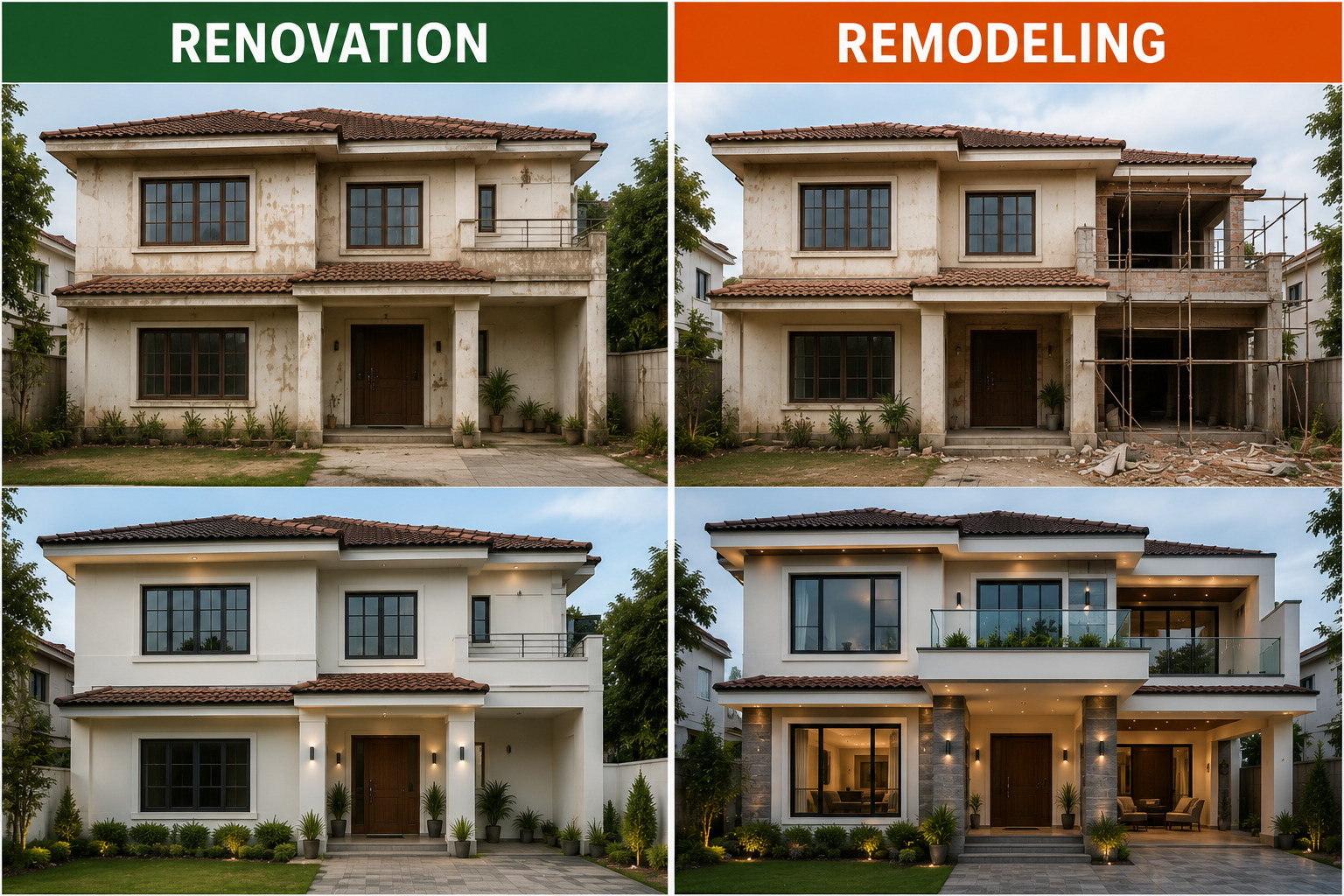
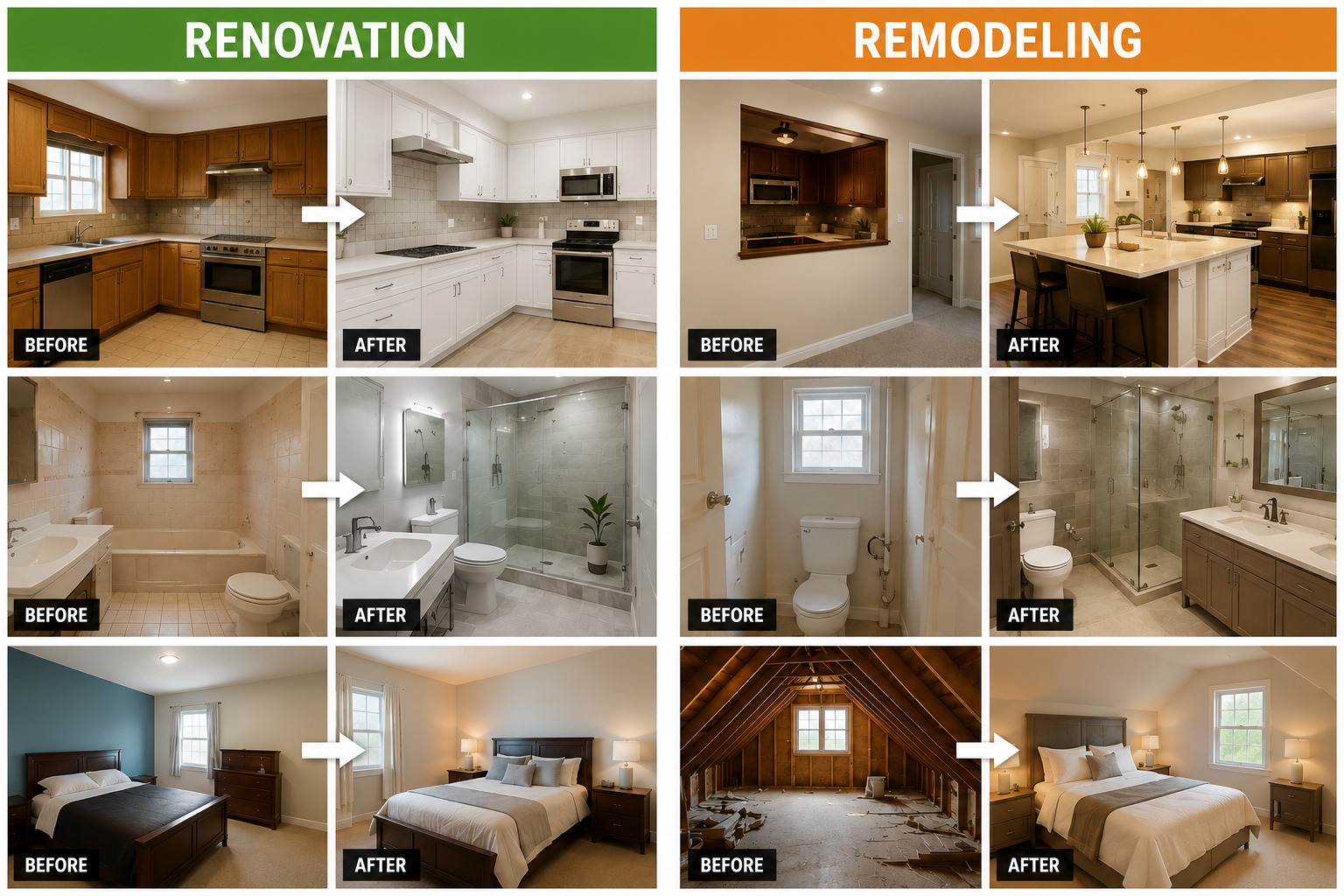
At first glance, renovation and remodeling may appear to achieve the same result: a better-looking home. However, from a construction perspective, they involve different objectives, levels of planning, and methods of execution.
The simplest way to understand the difference is this:
- Renovation improves what already exists.
- Remodeling changes how the space works.
Understanding this distinction helps homeowners choose the most practical solution before construction begins.
What Is Home Renovation?
Home renovation focuses on restoring, repairing, modernizing, or upgrading existing spaces while preserving the property’s original layout and structural framework.
Rather than changing how rooms are arranged, renovation improves the condition, appearance, and performance of the spaces you already have.
A renovation project may include:
- Repainting interior and exterior walls
- Installing new flooring
- Replacing outdated kitchen cabinets
- Upgrading bathroom fixtures
- Installing energy-efficient windows and doors
- Replacing ceiling designs
- Modernizing electrical fixtures and lighting
- Repairing damaged plaster and finishes
Although these improvements may seem straightforward, they can dramatically change the appearance and comfort of a home when planned correctly.
Real-World Example
Imagine a 12-year-old family home where the kitchen cabinets have deteriorated, the flooring has become worn, and the bathrooms no longer reflect modern design standards. The homeowner decides to replace the finishes, improve lighting, install new sanitary fixtures, and repaint the entire property.
The layout remains the same.
This is a renovation project because the goal is to improve the existing home rather than redesign it.
What Is Home Remodeling?
Remodeling involves changing the layout, function, or structure of a property to better suit the homeowner’s lifestyle or future requirements.
Instead of updating existing finishes, remodeling transforms the way spaces are used.
Common remodeling projects include:
- Removing walls to create open-plan living spaces
- Combining kitchen and dining areas
- Expanding bathrooms
- Adding new bedrooms
- Creating home offices
- Building walk-in wardrobes
- Converting unused rooms into functional living areas
- Reconfiguring interior layouts
Because remodeling often affects structural components, it typically requires more detailed planning, engineering input, and coordination throughout construction.
Real-World Example
A homeowner purchases an older house with several small, enclosed rooms. Instead of simply replacing finishes, they decide to remove selected non-load-bearing walls, enlarge the kitchen, and create a spacious open living area that better suits modern family life.
Although many finishes are also replaced during the project, the primary objective is to change how the home functions.
This is considered remodeling.
Renovation vs Remodeling: Key Differences
While both approaches improve residential properties, they differ in several important ways.
| Feature | Renovation | Remodeling |
| Primary Objective | Improve existing spaces | Transform layout or function |
| Structural Changes | Minimal or none | Often required |
| Design Flexibility | Limited | Extensive |
| Construction Complexity | Moderate | Higher |
| Planning Requirements | Standard planning | More detailed planning and engineering |
| Best For | Updating older homes | Adapting homes to changing lifestyles |
The right choice isn’t determined by which option is “better.” Instead, it depends on what your property actually needs.
Can One Project Include Both?
Absolutely.
Many successful residential projects combine renovation and remodeling to achieve the best overall result.
For example, a homeowner may decide to:
- Renovate bedrooms by replacing flooring, repainting walls, and installing modern wardrobes.
- Remodel the kitchen by removing a wall to create an open-plan living area.
This combination allows homeowners to invest where meaningful structural improvements are needed while preserving areas that already function well.
In practice, this balanced approach often delivers better long-term value than treating the entire property as either a full renovation or a complete remodel.
A Common Misconception
One of the biggest misconceptions homeowners have is believing that remodeling always provides better results simply because it involves more extensive work.
In reality, more construction doesn’t always mean a better outcome.
If your home’s layout already supports your family’s daily routine, investing in high-quality finishes, improved lighting, updated kitchens, and modern bathrooms through renovation may achieve exactly what you want without the additional complexity of structural alterations.
On the other hand, if the current layout limits functionality, remodeling may provide greater long-term value despite requiring more planning and construction effort.
The most successful projects begin with understanding the property’s strengths and limitations rather than assuming one approach fits every home.
When Should You Choose Renovation Instead of Remodeling?
Choosing between renovation and remodeling isn’t about selecting the larger project; it’s about identifying the solution that delivers the greatest value for your home. In many cases, homeowners assume they need a complete transformation when their property only requires strategic upgrades.
If your home’s structural framework remains sound and the existing layout still supports your family’s lifestyle, renovation is often the more practical and cost-effective option.
A renovation is generally the right choice when you want to:
- Modernize outdated interiors without changing room layouts.
- Repair wear and tear caused by years of daily use.
- Upgrade kitchens and bathrooms with new finishes and fixtures.
- Improve energy efficiency by replacing old windows and doors.
- Refresh flooring, ceilings, paintwork, and lighting.
- Prepare your property for resale by improving its overall presentation.
For many homeowners, these improvements provide the fresh, modern appearance they want while preserving the home’s original character.
Practical Example
Imagine a family living in a 15-year-old house in Islamabad. The property remains structurally sound, but the interiors feel dated. The kitchen cabinets have aged, bathroom fittings are worn, paint has faded, and ceramic tiles no longer match contemporary designs.
Instead of removing walls or changing the home’s layout, they decide to:
- Install modern kitchen cabinetry.
- Upgrade bathroom finishes.
- Replace flooring throughout the house.
- Improve lighting.
- Repaint the interior and exterior.
The home looks completely refreshed, yet its original layout remains unchanged. This is a well-planned renovation that improves both comfort and long-term property value without unnecessary structural work.
When Is Remodeling the Better Investment?
There are situations where simply updating finishes isn’t enough. As families grow and lifestyles evolve, the way a home functions becomes just as important as how it looks.
If your existing layout creates daily inconveniences, remodeling may provide a more practical long-term solution.
Remodeling is often the better choice when you want to:
- Create an open-plan kitchen and living area.
- Add a bedroom or guest suite.
- Convert unused spaces into a home office or study.
- Improve the connection between indoor living areas.
- Increase natural light by redesigning interior spaces.
- Adapt the home for changing family requirements.
Unlike renovation, remodeling focuses on improving the functionality of the property rather than simply updating its appearance.
Practical Example
A homeowner purchases an older house with several small enclosed rooms. Although the finishes can easily be replaced, the overall layout feels restrictive and doesn’t support modern family living.
Instead of only installing new flooring and paint, the project includes:
- Removing selected non-load-bearing walls.
- Expanding the kitchen.
- Connecting the dining and living areas.
- Creating better circulation throughout the home.
The finished property doesn’t just look newer; it functions differently. That’s the defining characteristic of remodeling.
Five Questions to Ask Before Starting Your Project
Before deciding between renovation and remodeling, ask yourself these important questions:
1. Does My Current Layout Still Work?
If you’re satisfied with how your rooms are arranged but want a more modern appearance, renovation is usually the smarter investment.
However, if your home’s layout no longer supports your daily routine, remodeling may provide better long-term value.
2. What Is the Condition of My Home?
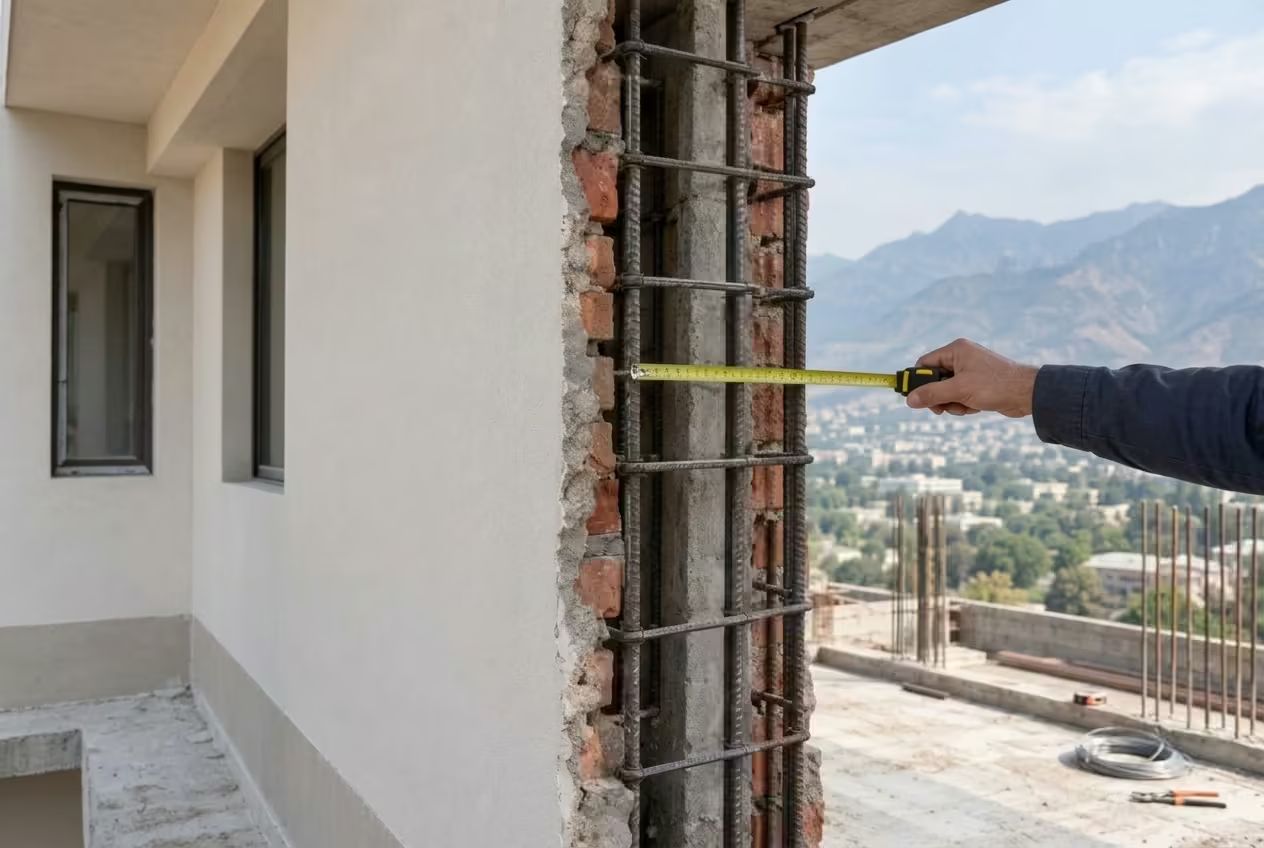
A professional inspection should always be one of the first steps before beginning construction.
Experienced contractors evaluate factors such as:
- Structural stability.
- Existing plumbing.
- Electrical systems.
- Moisture damage.
- Waterproofing issues.
- Wall conditions.
- Roof performance.
Identifying these issues early helps homeowners avoid unexpected repairs once construction has already begun.
3. What Are My Long-Term Plans?
Think beyond today’s requirements.
If you expect your family to grow, work from home more often, or remain in the property for many years, investing in better functionality today can reduce the need for future construction work.
Planning with the future in mind often results in better design decisions and greater long-term satisfaction.
4. Am I Improving Appearance or Functionality?
This simple question often makes the decision much easier.
If your primary goal is improving appearance, renovation is generally the right direction. If your objective is changing how your home works, remodeling becomes the better solution.
5. Have I Planned for Unexpected Work?
One lesson experienced construction professionals quickly learn is that older homes sometimes reveal hidden issues once existing finishes are removed.
These may include:
- Damaged plumbing lines.
- Outdated electrical wiring.
- Moisture behind walls.
- Surface cracks requiring repair.
- Waterproofing deficiencies.
For this reason, many professionals recommend keeping a contingency allowance within your project budget. It provides flexibility if additional work becomes necessary after construction begins.
Common Mistakes Homeowners Make
Many renovation and remodeling projects become more expensive than expected, not because the work is poorly executed, but because planning was incomplete.
Some of the most common mistakes include:
- Starting construction without detailed drawings or a clear project scope.
- Choosing materials based only on price instead of long-term durability.
- Making design changes after work has already started.
- Ignoring hidden structural or waterproofing issues.
- Hiring contractors without reviewing previous work or project experience.
- Underestimating the importance of proper planning before demolition begins.
In our experience, projects with a well-defined plan, realistic budget, and clear communication generally progress more smoothly and produce better long-term results.
How to Decide Which Option Is Right for Your Home
After understanding the differences between renovation and remodeling, the final decision should be based on your property’s current condition, your family’s lifestyle, and the results you expect from the project.
Instead of asking, “Which option is better?”, ask a more practical question:
“Which solution will improve my home without creating unnecessary work or expense?”
If your existing layout still supports your daily routine and the structure remains in good condition, a carefully planned renovation may provide everything you need. Updating finishes, improving lighting, modernizing kitchens and bathrooms, and replacing worn materials can completely refresh your living environment while preserving the home’s original design.
However, if your property no longer functions efficiently, remodeling offers the opportunity to create spaces that better reflect the way your family lives today. Improving circulation, creating open-plan areas, or adding functional rooms can transform not only the appearance of a home but also the overall living experience.
There isn’t a universal answer because every property presents different opportunities and challenges. A professional site assessment remains the most reliable way to determine which approach offers the greatest long-term value.
Why Planning Is More Important Than Construction
One lesson experienced construction professionals learn early is that successful projects rarely begin on the construction site; they begin during the planning stage.
Many delays, unexpected costs, and design changes occur because important decisions were rushed before work started.
Professional planning helps homeowners:
- Clearly define project objectives.
- Evaluate the property’s existing condition.
- Identify structural limitations.
- Select suitable materials.
- Develop realistic construction timelines.
- Reduce costly design changes during construction.
Whether your project involves updating finishes through renovation or redesigning spaces through remodeling, careful planning creates a smoother construction process from beginning to end.
Looking Beyond Today’s Needs
Home improvement should never focus only on solving today’s problems. The most successful projects also consider how your needs may change over the next five, ten, or even twenty years.
For example:
- A young family may eventually need additional bedrooms.
- Remote work may require a dedicated home office.
- Older homeowners may prioritize accessibility and easier movement throughout the house.
- Growing families often benefit from larger kitchens and shared living spaces.
Thinking long-term allows homeowners to make smarter construction decisions and avoid repeating major work in the future.
Renovation or Remodeling: Which Adds More Value?
Both renovation and remodeling can improve property value when they are planned around the condition of the home and the expectations of future occupants.
A thoughtfully renovated home often attracts buyers because it feels modern, well-maintained, and ready to move into. Likewise, a carefully remodeled property can become more functional, making it better suited to contemporary lifestyles.
Rather than asking which option increases value the most, homeowners should focus on making improvements that genuinely enhance the property’s usability, durability, and overall quality.
Well-executed projects don’t simply create attractive spaces; they create homes that remain practical and comfortable for many years.
Frequently Asked Questions
What is the main difference between renovation and remodeling?
Renovation focuses on restoring, repairing, or updating existing spaces while keeping the original layout largely intact. Remodeling changes the layout or function of a space to better meet the homeowner’s needs.
Is renovation usually more affordable than remodeling?
Renovation projects often involve fewer structural modifications, which can make planning and budgeting more straightforward. However, the overall investment depends on the property’s condition, project scope, materials, and design requirements.
Can I renovate and remodel my home at the same time?
Yes. Many homeowners renovate certain areas while remodeling others. For example, bedrooms may only require cosmetic upgrades, while kitchens or living areas may benefit from structural layout changes.
How do I know whether my home needs renovation or remodeling?
The best starting point is a professional property assessment. Evaluating the existing structure, project goals, and future requirements helps determine the most suitable approach before construction begins.
Should I renovate before selling my property?
Strategic renovations that improve functionality, appearance, and overall condition can make a property more attractive to potential buyers. The most appropriate improvements depend on the property’s current state and the local market.
Final Thoughts
Every home tells a different story, and every construction project should begin with understanding that story before making design decisions. While renovation and remodeling are often discussed together, they serve different purposes. Renovation focuses on improving what already exists, while remodeling reimagines how a home functions to support modern living better.
The right decision isn’t determined by the size of the project; it’s determined by how well the proposed improvements align with your property’s condition, your family’s lifestyle, and your long-term goals. Investing time in professional planning, realistic budgeting, and careful decision-making before construction begins often leads to better outcomes than rushing into unnecessary structural changes.
At OKK Construction, we believe successful projects are built on informed decisions, quality workmanship, and practical planning. Whether you’re modernizing an existing home or redesigning spaces to meet changing family needs, understanding the difference between renovation and remodeling is the first step toward creating a home that delivers lasting comfort, functionality, and value.