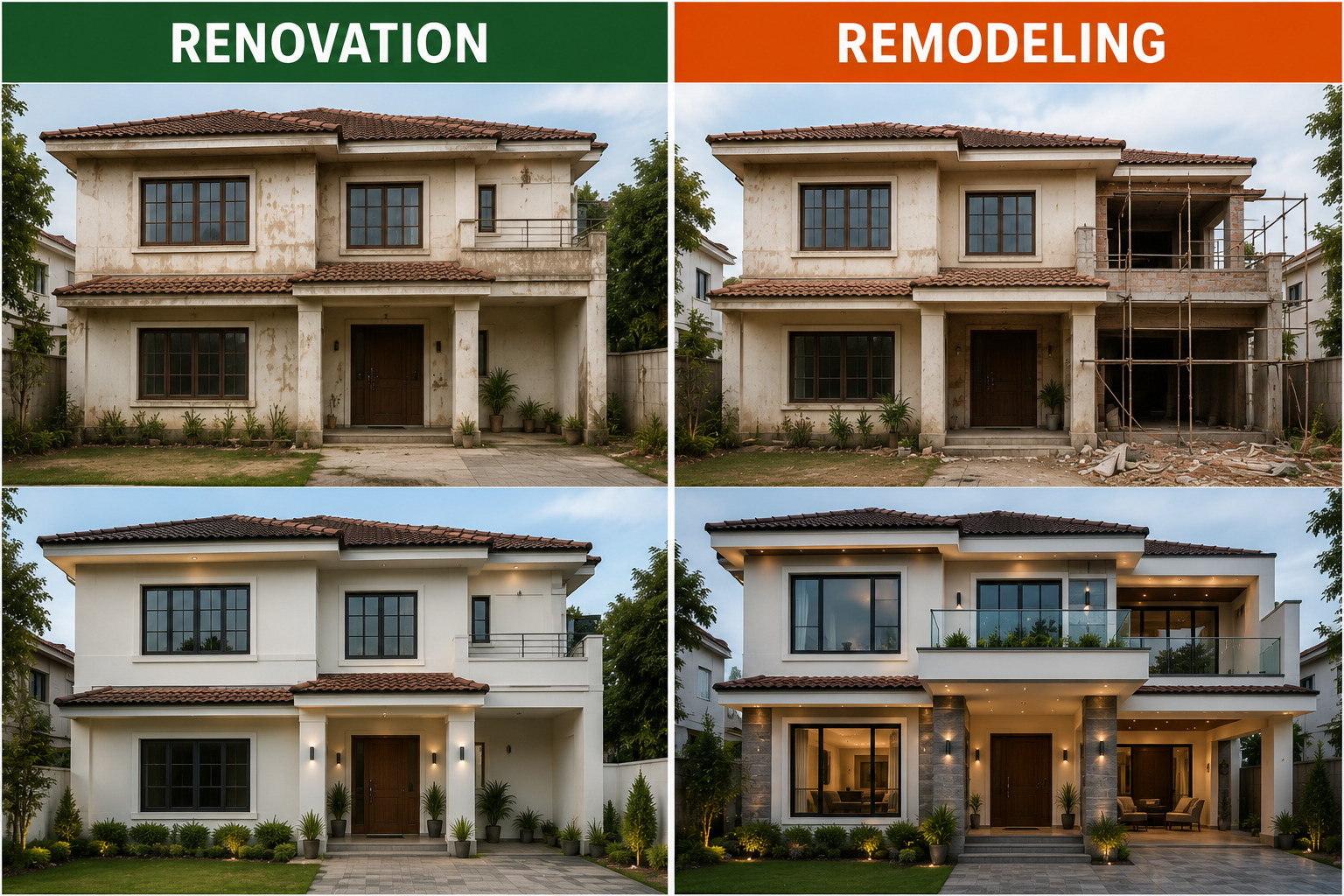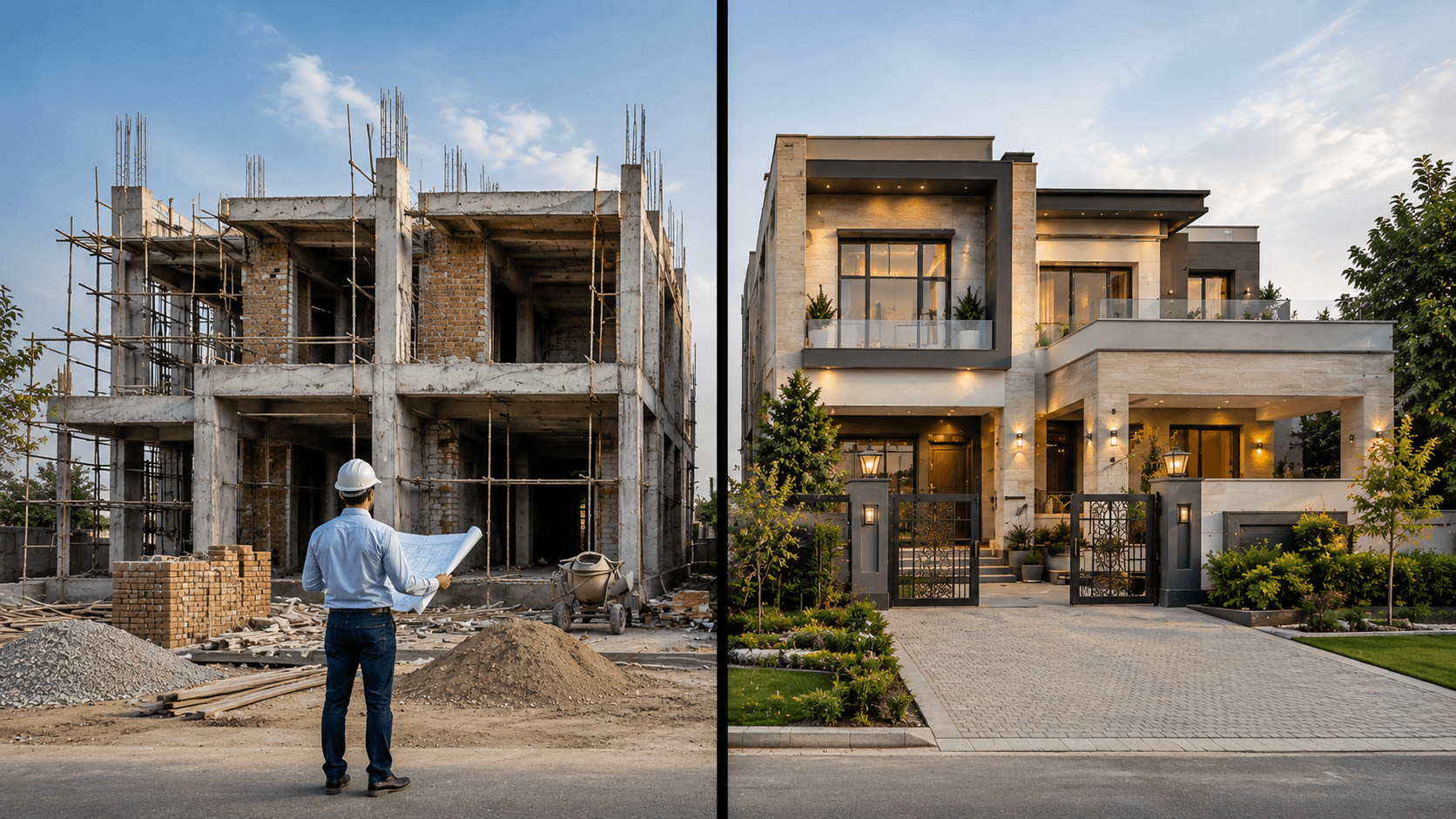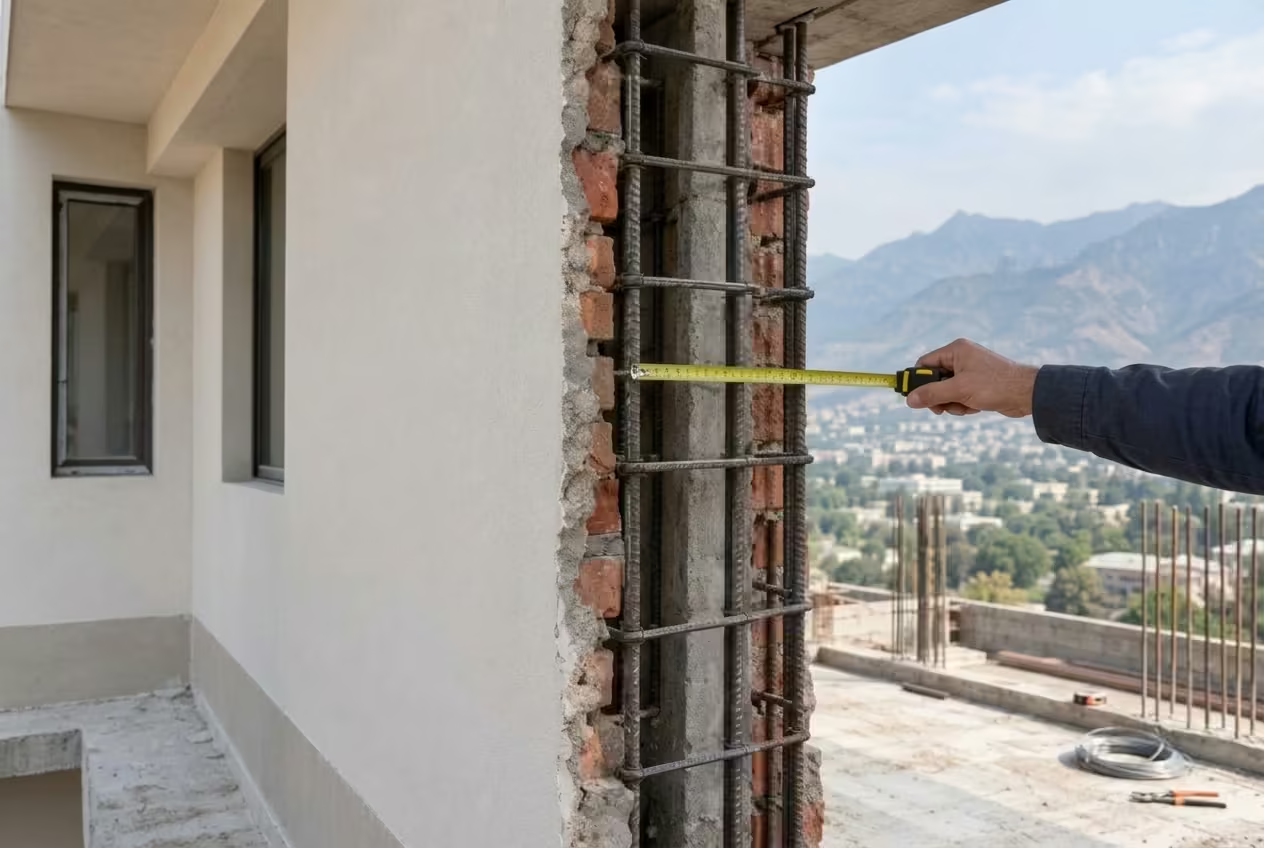
Short answer: For most full-house builds in Islamabad, a construction company is the safer choice, provided it offers a written scope of work, registered engineers, and a contract you can enforce. A thekedar can work if you can supervise daily and arrange structural design yourself. Safety depends on the arrangement, not the label.
If you own a plot in Islamabad or Rawalpindi and are deciding who should build on it, this guide compares the two routes honestly: what each one covers, where the risk sits, and how to check either option before you pay anything.
What is a thekedar, and how is a company different?
In Pakistan, “thekedar” usually means an individual contractor who manages a labour team. Builders in Islamabad generally offer one of three arrangements:
- Labour-only (labour rate): you pay for workers. You buy all materials, supervise the work, and coordinate every trade.
- Labour plus material: the contractor also buys materials. Quality depends on what he chooses and what is written down.
- Company contract: grey structure or turnkey; a registered company handles design coordination, materials, labour, supervision, and handover under a single written scope.
The real difference is who carries the risk when something goes wrong.
Side-by-side comparison
| Thekedar (commonly) | A well-run company should provide | |
| Structural drawings | Often arranged separately by you, or skipped | Prepared or coordinated before work starts |
| Supervision | The thekedar himself, or you | Engineers and site supervisors |
| Materials | You buy them, or trust his choice | Grades and brands specified in writing |
| Contract | Often verbal or a single page | Written scope, BOQ, and payment schedule |
| Payments | Frequently advance-based | Linked to completed stages |
| Approvals | Usually your responsibility | Can be coordinated by the company (confirm in writing) |
| After handover | Hard to hold anyone accountable | A contract to refer back to |
| Your time | High. You are the project manager. | Low. You review updates and decide. |
| Best for | Small jobs; owners who can supervise | Full houses; busy or overseas owners |
Not every company delivers the right-hand column. See How to choose a construction company for more guidance.
Why the cheapest quote is not always the cheapest house
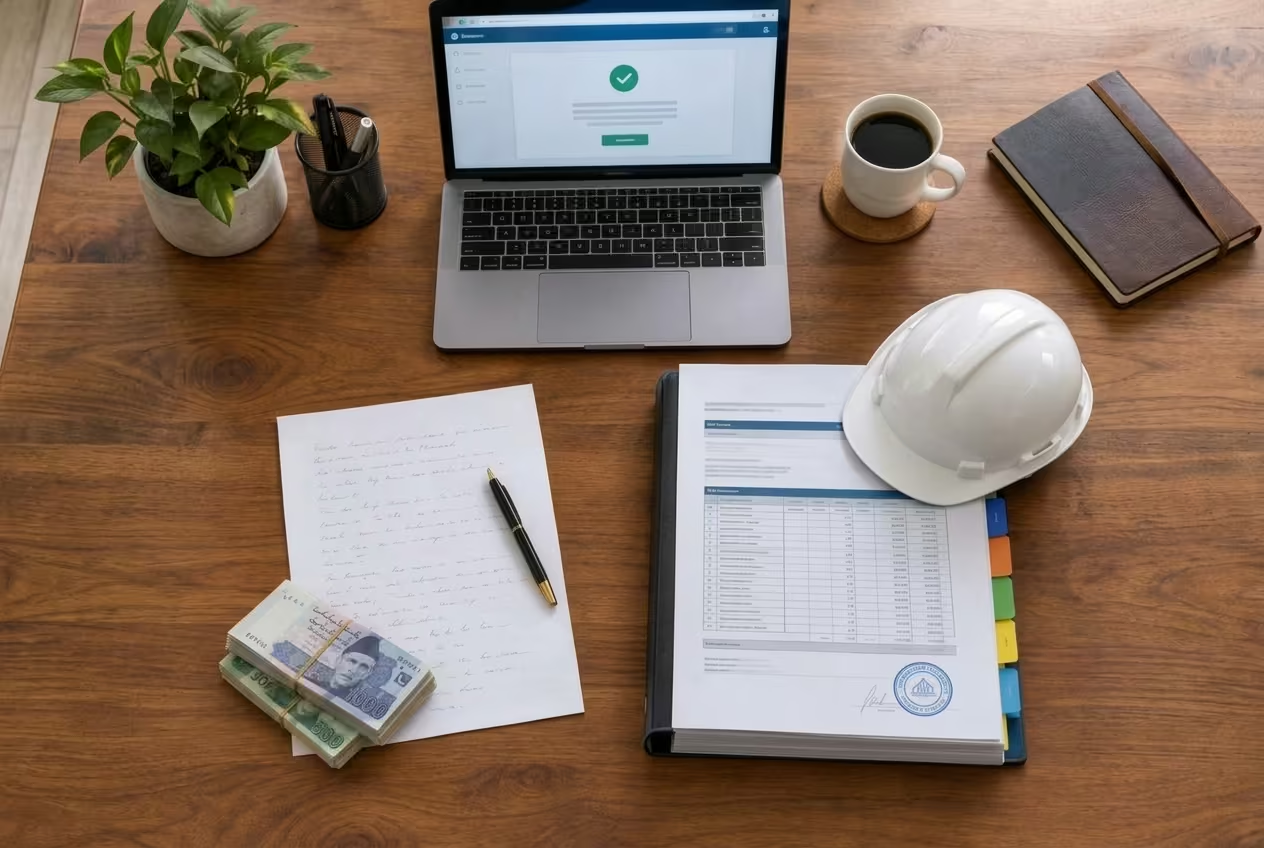
A labour-only rate looks far lower than a company quote, but it is not the same product. The labour rate leaves out materials, supervision, and your own time.
To compare fairly, count the full cost of each route:
Total cost = labour + materials + wastage or loss + supervision + delay + rework
A thekedar route can save money if you buy well and manage tightly. It can also cost more if a wall or slab has to be redone.
How much does a thekedar actually save?
There is no reliable figure. Numbers quoted online are estimates and depend on your materials, your supervision and your luck. Be cautious of anyone, on either side, who promises a specific saving.
A proper quote from any builder should list:
- Work broken down by stage
- Material grades and brands
- The area basis (covered area) used for pricing
- What is excluded
- Rates for extras and changes
- The payment schedule tied to stages
If a builder will not put these on paper, that tells you something.
When a thekedar can be the right choice
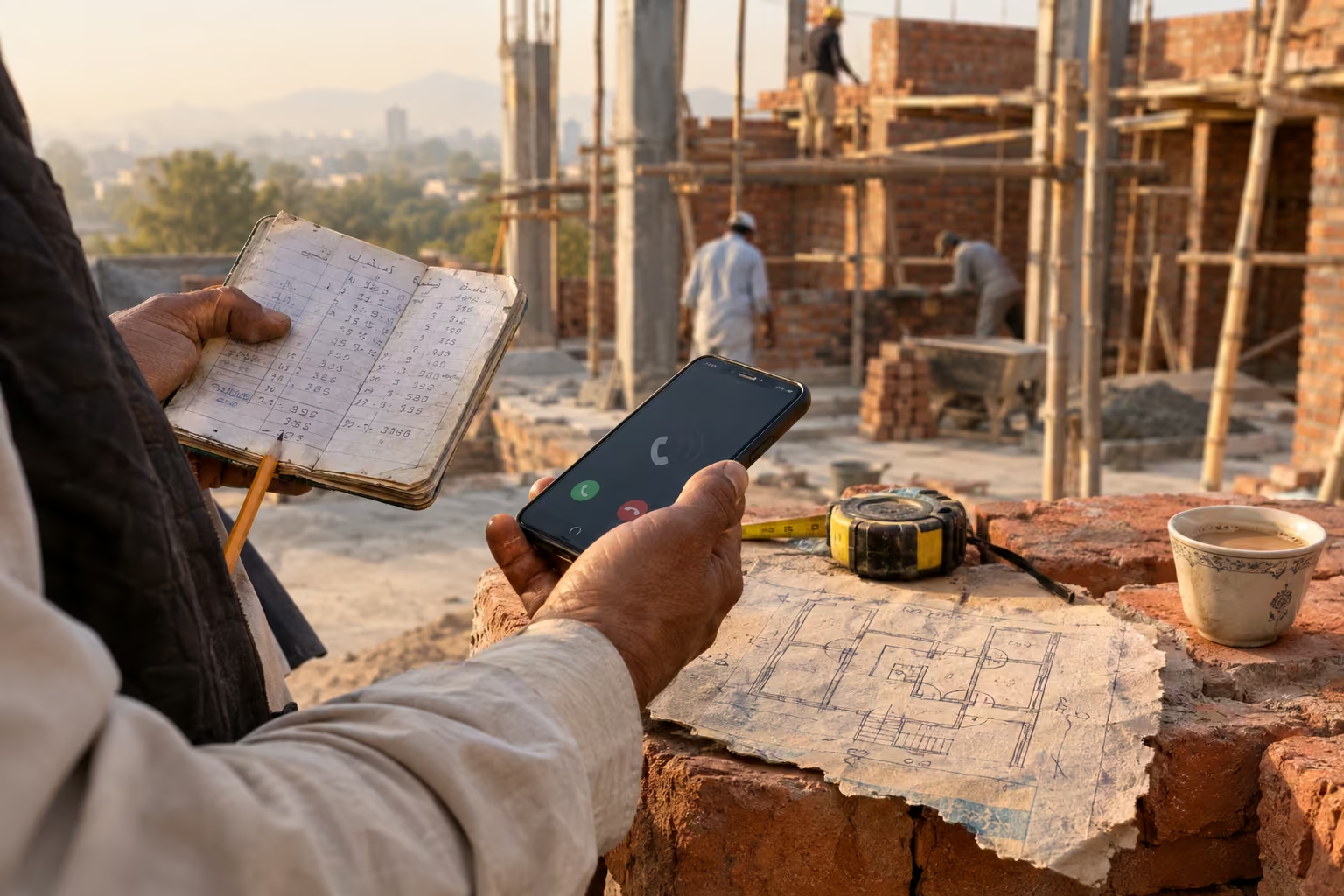
A thekedar is a sensible option when:
- The job is small, such as a boundary wall, a single-room extension, or repairs
- You have construction knowledge, or a trusted engineer who can visit regularly
- You can be on site most days
- You already have approved drawings and structural design
- You are comfortable buying and tracking materials
Many thekedars are skilled and honest. The risk comes from the arrangement, especially when no one checks the work.
Where the risk shows up
Problems rarely appear on day one. They show up later:
-
No structural design.
Column and beam sizes get decided by habit instead of calculation.
-
Material substitution.
The steel or cement in the quote is not what is delivered, and it is hidden once plastered.
-
Payments ahead of progress.
You lose leverage if work slows or stops.
-
Delays.
One contractor often runs several sites at once.
-
Approvals.
Buildings in CDA-governed areas fall under the Islamabad Building Regulation, 1963, and plans must be approved before construction starts. CDA also issues a completion certificate confirming the construction matches the approved plan.
-
No recourse.
Without a written contract, a defect after handover usually means paying again.
The middle option: labour contractor plus independent engineer
Some owners hire a labour contractor and separately appoint a civil engineer to design and supervise. This works if the engineer visits regularly and checks the key stages: foundation, reinforcement before concrete, and slab casting. It costs less than a full company contract, but you still coordinate the project.
A company is not automatically safe
A company name does not guarantee quality. Before signing with any builder, including us, check:
- PEC registration. The Pakistan Engineering Council has a public verification portal (verification.pec.org.pk) where you enter the licence category and number to see a firm’s profile. A firm owned by a non-engineer can only register in category C-6, so ask which category the firm holds and which registered engineer stands behind it.
- Company registration and tax. Ask for the SECP registration and NTN, and check that the names match the contract.
- Named supervising engineer. Ask who will supervise your site and check that person’s registration.
- Real sites. Visit one finished and one ongoing house, and speak to the owner if possible.
- A written contract with a BOQ. Scope, materials, payment stages, and change process should all be on paper.
If you are building from abroad
Remote builds fail most often when no one reports back. Whichever route you take, ask for stage-wise photos or video, a named contact, and a trusted local person for spot checks. This is hardest with a thekedar, because he is the only source of information. At OKK, we coordinate planning and site progress remotely with regular reporting, so overseas clients can see each stage.
How OKK Construction works
OKK Construction is a private limited company at House 10, Main Nazim-ud-din Road, F-6/1, Islamabad. We manage residential and commercial projects in Islamabad and Rawalpindi, including DHA, Bahria Town, and Gulberg Greens, from planning to handover under one defined scope.
- Architects, structural engineers, project managers, and site supervisors work from the same approved plans, with one project manager tracking progress.
- Drawings, structural calculations, and material specifications are finalized before major construction begins.
- Structural and finishing work is inspected at defined stages before the next phase starts.
- You are briefed at each planning milestone and construction stage.
- Timelines are milestone-based and specific to your project. We do not quote a generic industry average.
Seven questions to ask any builder before signing
- Who will supervise my site, and what is his PEC registration?
- Will I receive structural drawings before work starts?
- Can you show a written BOQ with material grades and brands?
- How are payments linked to completed stages?
- How are changes priced and approved once work has started?
- Who handles approvals, and who is responsible if they are delayed?
- What are your defect responsibilities after handover, in writing?
Which should you choose?
- Choose a company if you are building a full house, live abroad, work full-time, or want a written scope and someone accountable.
- Choose a thekedar with an independent engineer if you can stay involved, your budget is tight, and you accept the coordination work.
- Avoid any arrangement with no written scope, no drawings, and payments far ahead of progress, whether it comes from a company or a thekedar.

Frequently asked questions
Is a construction company always more expensive than a thekedar?
The quote usually is, but the quote is not the final cost. Compare labour, materials, supervision, delays, and rework across both routes.
What is labour-rate construction?
You pay only for workers. You buy all materials and supervise the project, or hire someone to do it.
How much can I save by using a thekedar?
There is no dependable figure. It depends on how well you buy, supervise, and avoid rework.
How do I verify a construction company in Islamabad?
Check its PEC registration on the PEC portal, ask for SECP and NTN details, confirm the supervising engineer, and visit its projects.
What should a construction contract include?
Scope by stage, BOQ with material specifications, payment schedule tied to progress, timeline, change process, exclusions,s and defect responsibilities.
Who handles CDA map approval and the completion certificate?
It depends on your agreement, so get it in writing. Plans must be approved before construction, and the completion certificate comes after.
Can I hire a thekedar for grey structure only?
Yes, many owners do. Make sure you have structural drawings and a way to check reinforcement and concrete work.
Can I manage a house build from abroad?
Yes, if the builder gives regular, specific reporting and you have someone you trust for spot checks.
Can I change the design after construction starts?
Yes, but changes affect cost and timeline. A good contract states how changes are priced and approved. For the bigger picture, see our guide on Grey Structure vs Turnkey Construction
Talk to our team
Tell us your plot size, location, and what you want to build. Our team will help you understand the project scope, key cost factors, and the next steps so you can move forward with a clear plan.